Often, I write about different aspects of urban planning, particularly with a focus on gender sensitivity and inclusion. Among my commissions are various studies in which I apply interdisciplinary urban research or plan complex participatory processes on my own or in collaboration with other professionals. Besides this, I contribute to magazines, manuals and other local & international publications.
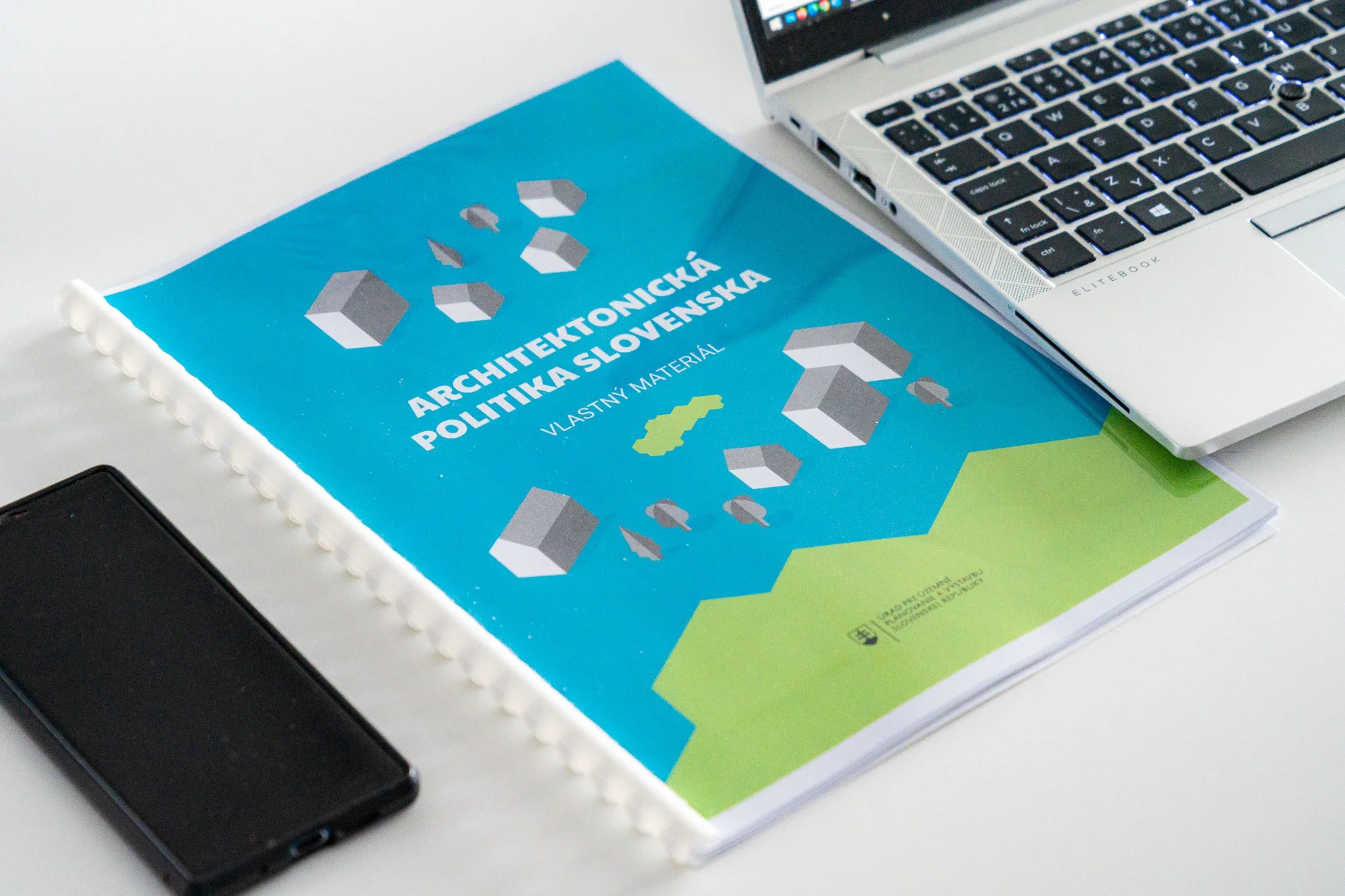
The Architectural Policy of Slovakia (APS) is a strategic document that for the first time defines a vision and framework for the systematic development of the quality of the built environment in Slovakia. Approved by the government in December 2025, it focuses on improving settlements and landscapes, the quality of buildings and cities, society’s relationship to architecture, and supporting research. It also explicitly incorporates the principles of the New European Bauhaus — sustainability, aesthetics and inclusion. Its objectives are to enhance quality of life, better coordinate development, and ensure the effective use of EU funds.
Culture has the power to transform cities and significantly enhance the well-being of their residents. The book “A few stories about the heritage of the ECoC Košice 2013“, authored by Milota Sidorová, is a vivid testament to how the title of European Capital of Culture influenced Košice and its community. Stories filled with passion, determination, and unexpected challenges reveal what was achieved and the lasting impact ECoC left on the city.

Bratislava 2030 is an accompanying publication of the city's strategic plan (city development program) Bratislava 2030, which was approved by the city council in June 2022. It introduces its readers to the structure of the plan, summarizes the goals and programs that will be a priority for the city in the coming years in a simpler language and in a more accessible form. The richness of the plan is illustrated by accompanying artifacts of daily life from the past and future. The notes that you will find throughout the publication also refer to the document in full, whether it is the chapters that we used as a basis for the creation, or the specific goals that we illustrate in the publication.

The new guidebook I edited and co-authored provides complex ways on how to involve people in city planning. Municipalities, architects and developers can draw from it.

The book I edited and co-authored deals with several means how to revitalize unused publicly owned buildings and sites. We have come a long way. From the period of state ownership, through decades of wild privatization, to the renewed search for public interest. Buildings that were once factories, schools or warehouses can find a new use today. So they don't all have to end up in disrepair or as residential areas. Can municipalities recognize other types of collective investors who could give their city or district a different, community impulse?

The Shared Cities Atlas applies the new, global ‘sharing paradigm’ in architecture and public sphere to a site-specific situation in seven cities in Central Europe. Mapping current practices of sharing and new fields of action in case studies, it contextualizes the phenomenon in research papers, data, and photography.
The ideas of a ‘right to the city’, of common resources, or ‘the urban commons’ all of which are in vogue in contemporary architectural discourse illustrate the paradigm shift towards a sharing perspective. In ‘sharing cities’ the emphasis lies in the right to remake the cities as a form of urban social contract with a specific creative or critical agenda. The Atlas presents creative forms of sharing driven by idealistic positions and collective actions – new approaches to sharing of spaces and architecture, experience and knowledge, data, or collective histories.

Restless Cities: Lessons from Central Europe is a publication that reflects a year-long training programme of the Prague office of the Heinrich- Böll-Foundation focusing on understanding the political aspects of urban planning in the Czech Republic, Slovakia and Hungary. It consists of four thematic chapters that offer introductions into each topic, short texts by selected invited experts, participants' views, and key learnings about sustainability and politics. The authors of the texts are not just the experts who con- tributed to the training programme, but also the participants themselves share their learnings and views herein. We hope this book will help readers to understand the o en-invisible areas where urban planning moves from the realm of expertise-only into the realm of political action and that it will inspire readers to further politi- cal learning and engagement.
Cooperation: Zdenka Lammelova
Client: Heinrich-Boll Stiftung, ev Prague Office
Published: autumn 2018
ISBN: 978-80-907076-9-6

I have edited the first manual of outdoor advertising in Bratislava. The publication follows almost 3 years long process of community development along with more than a year long participator process on the topic of outdoor advertising in Obchodna street.
Client: Obchodna a okolie, ngo, The City of Bratislava
Published: May 2018
ISBN: 978–80–972849–1–6
You can download the publication here:

From the fall 2017 until May 2018 we conducted a participatory process exploring needs and opinions of residents of Bratislava-Old Town in the area of Panenska and its surroundings. The study was used as a preparatory material for emerging Manual of Public Spaces in this district.
Cooperation: Punkt, ngo
Client: Bratislava - Old Town
Published: Spring 2018

The concept planning study of one of the most important axis and boulevards of Pardubice, Czech Republic.
Cooperation: Marko&Placemakers
Client: The City of Pardubice
Published: 2018